
We all need positive reinforcement to stay focused and driving toward our goals. The question is, what drives you? This blog entry will describe five major motivational theories at work each time we are invited to participate in school, or in life. As a teacher my primary goal is to advocate for learning. Sounds easy enough, right? Sometimes.
Well, keep in mind that each of us has free will. And, each of us has a handful of talent in a specific area or another. These areas soon dominate our behaviors, while our weaker areas become atrophied. Self- doubt soon creeps in and soon we might even begin to label ourselves as "good" or "bad" at entire subject areas! The truth is if we are curious and interested in the path that we are on we have the power to build skills in weaker areas of intelligences. Why? Because we choose to. So, how do we build motivation in students who are reluctant learners? What about negative self-talk? Self doubt about ability will cripple even the most gifted among us.
Beliefs About Ability
Rate the following statements taken from Dweck (2000) on a scale
from 1 (Strongly Agree) to 6 (Strongly Disagree).
- ___ You have a certain amount of intelligence and you really can’t do much to change it.
- ___ You can learn new things, but you can’t really change your basic intelligence.
- ___ No matter who you are, you can change your intelligence a lot.
- ___ No matter how much intelligence you have, you can always change it quite a bit.
Some of the most powerful beliefs affecting motivation in school are about ability. By examining these beliefs and how they affect motivation, we will understand why some people set inappropriate, unmotivating goals; why some students adopt self-defeating strategies; and why some students seem to give up altogether. Adults use two basic concepts of ability (Dweck, 1999, 2002). An entity view of ability assumes that ability is a stable, uncontrollable trait—a characteristic of the individual that cannot be changed. According to this view, some people have more ability than others, but the amount each person has is set. An incremental view of ability, on the other hand, suggests that ability is unstable and controllable—“an ever-expanding repertoire of skills and knowledge” (Dweck & Bempechat, 1983, p. 244). By hard work, study, or practice, knowledge can be increased and thus ability can be improved. What is your view of ability? Look back at your answers to the questions above—you can tell.
Young children tend to hold an exclusively incremental view of ability. Through the early elementary grades, most students believe that effort is the same as intelligence. Smart people try hard and trying hard makes you smart. If you fail, you aren’t smart and you didn’t try hard; if you succeed, you must be a smart, hard worker (Stipek, 2002). Children are age 11 or 12 before they can differentiate among effort, ability, and performance. About this time, they come to believe that someone who succeeds without working at all must be really smart. This is when beliefs about ability begin to influence motivation (Anderman & Maehr, 1994).
Chapter 5: Motivation
ISBN: 9780205578443 Authors: Anita Woolfolk Hoy, Wayne Kolter Hoy
Copyright © Pearson Education (2009)
5 Approaches to Motivation
Over the decades a compelling amount of research has been conducted and gathered regarding the significance surround the following five approaches to motivation:- Behavioral
- Humanistic
- Cognitive
- Social cognitive
- Sociocultural
The essential question that any educator must
ask oneself is, “What approach should be used?” directly followed by, “When
should it be used?” Educators have potentially high impact if their emotional
quotient (EQ) is in direct alignment to their student(s) chosen intelligences. We have any number of areas where we are each intellectually smart.

IMAGE: http://www.connectionsacademy.com/blog/posts/2013-01-18/Understanding-Your-Student-s-Learning-Style-The-Theory-of-Multiple-Intelligences.aspx
Educators, and schools, are either effective
or ineffective. A school that is effective as a whole has a very positive
impact on individual achievement. The collectiveness of a school’s approach
will have a direct correlation to the overall success of the individual
students. Additionally, incorporating a
variety of approaches to motivation will directly impact the effectiveness of
overall student programming, academic, socially, and socioculturally.
A comprehensive and collaborative
plan utilizing the following five approaches to motivation increase the
probability of student motivation:
Behavioral
|
Humanistic
|
Cognitive
|
Social
Cognitive
|
Sociocultural
|
|
Source
of Motivation
|
Extrinsic
|
Intrinsic
|
Intrinsic
|
Intrinsic
and Extrinsic
|
Intrinsic
|
Important
Influences
|
Reinforcers,
rewards, incentives, and punishers
|
Need for
self-esteem, self-fulfillment, and self-determination
|
Beliefs,
attributions for success and failure, expectations
|
Goals,
expectations, intentions, self-efficacy
|
Engaged
participation in learning communities: maintaining identity through
participation in activities of group
|
Key
Theorists
|
Skinner
|
Maslow
Deci
|
Weiner
Graham
|
Locke
& Latham Bandura
|
Lave
Wenger
|
Source: From Anita E.
Woolfolk, Educational Psychology: Active Learning Edition, 10/e.
Published by Allyn & Bacon, Boston, MA. Copyright © 2008 by Pearson
Education.

- Performance goals set by students include reaching his or her personal best. Progress will be measured incrementally toward meeting individual academic benchmarks.
- Assessment may be informal and/or formal through ongoing observation and also by factoring in summative assessment.
How to introduce a plan utilizing the behavioral theory:
Explain that rewards and consequences may be used to manage
and modify student behavior. Habits are
learned behaviors. So, this means that they may also be “unlearned.” Behavior
modification takes time, and it takes desire. The desire to change ones
behavior depends on the results or consequences that are possible. The end
result is that the student learns that he or she has control over both the earning
either rewards, or consequences dependent on the ability to self-control. In
the end, procrastination becomes an undesirable habit. If any reward or incentive systems are used, make sure participants
(teachers or students) understand that the goal is to learn and improve in some
area, not just to perform well or look smart. And be sure the goal is not too
difficult. Individual students or teachers may not yet be expert at setting
their own goals or keeping the goal in mind, so encouragement and accurate
feedback are necessary (Hoy, 2009).
Rewards Reinforcer:

Punishment / Consequences:


IMAGE: https://winecountrymom.files.wordpress.com/2014/06/the-village-chore-points-list.jpg
A chart like the one above may used as an example to customize
and personalize for home or classroom use.
How to introduce a plan utilizing the humanistic theory:
There are many theories surround
the topic of achievement and motivation. A humanistic view of behavior
motivation recognizes the need for self-esteem, self-fulfillment, and
self-determination. The source of motivation in the humanistic view of
motivation is intrinsic. According to Schunk (2000):
Some psychologists
see achievement motivation as a stable and unconscious trait, something the
individual has more or less of. Children who see that their actions can have an
impact and who are taught how to recognize a good performance are more likely
to grow up with the desire to excel (Hoy, 2009).
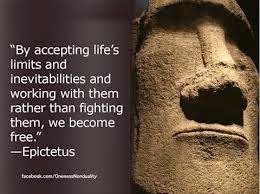
IMAGE: http://mikaljackson.wordpress.com/tag/happiness/
Explain that the goal is to
improve in some area, and that the goal is not too difficult. Every step toward
concept attainment is a step forward, even if a first or second attempt didn’t
succeed. Remind students that failure signals that more effort is needed, and
does not signal that it’s time to quit. Everyone has certain strengths and
weaknesses. Encourage students to use
their strengths to build up their weaknesses.
How to introduce a plan utilizing the cognitive theory:
“Students and teachers are more likely to work toward goals that are
clear, specific, reasonable, moderately challenging, and attainable within a relatively
short period of time,” (Hoy & Hoy, 2009). Goal setting at the onset of the
school year is most important. The goals that teachers set need to be clear and
specific, and attainable. Martin Covington (1992) maintains that
individual student goals are most effective when students are involved in
setting them (Marzano, 2003).
The cognitive view to approaching
behavior is based on cognitive drivers with intrinsic motivators that are
influenced by beliefs, attributions for success and failure, and expectations.
According to Stipek, 2002:
Other theorists see achievement
motivation as a set of conscious beliefs and values shaped mainly by recent
experiences with success and failure and by factors in the immediate situation
such as the difficulty of the task or the incentives available (Hoy, 2009).

How to introduce a plan utilizing the social cognitive theory:
“What choices do
people make about their behavior? Motivation is either internal or external.
Internal motivation is personal factors such as needs, interests, curiosity and
enjoyment. External motivation is environmental factors such as rewards, social
pressure, and punishment” (Hoy, 2009). Students make choices about their
behavior based on a grade, rewards, needs, or advancement. Advancement may take
the form of knowledge, or it may be related to social status. Belonging to a
particular group or another carries social stigmas, whether we intend for these
stigmas to exist or not.

IMAGE: http://www.dominatethegmat.com/2013/10/from-550-to-710-in-3-months-a-gmat-success-story/
Explain that the goal is to improve in some area, and not
just to perform well or to appear to be smart. Reinforce that predictors based
on past performance are best minimized. Every opportunity to learn is a new
opportunity to see things in new ways. Henry Ford once said, “Whether you
believe you can, or you believe you can’t– you’re right.”
How to introduce a plan utilizing the sociocultural theory:
Atkinson’s view of behavior
motivation is based on social cognitive and sociocultural
motivators, and is highly influenced by both intrinsic and extrinsic
drivers.
Atkinson (1964) added a new
consideration to the theory of achievement need when he noted that all people
have a need to avoid failure as well as a need to achieve. If the need to avoid
failure is greater than the need to achieve in a particular situation, the risk
will be threatening rather than challenging, and the resultant motivation will
be to avoid the situation (Hoy, 2009).

IMAGE: http://www.ultimatemartialfitness.com.au/blog/beliefs-create-reality/
Encourage intrinsic drivers through recognizing the value of
knowledge for the sake of knowledge. Concept mastery is the goal, as opposed to
social hierarchy or positioning.
How to Implement these Strategies at Home and at School
So, now that you have a better understanding about the five major theories surrounding behavior modification the time has come to put them into action. Any action plan needs to be measurable in order to capture whether results have been gained. The chart below is a great way to get started on personalizing your own progress towards goals.
Theory into Action Guidelines: Family and
Community Partnerships
Understand
family goals for children.
Examples
1. In an informal setting,
around a coffee pot or snacks, meet with families individually or in small
groups to listen to what they want for their children.
2. Mail out questionnaires
or send response cards home with students, asking what skills the families
believe their children most need to work on. Pick one goal for each child and
develop a plan for working toward the goal both inside and outside school.
Share the plan with the families and ask for feedback.
Identify
student and family interests that can be related to goals.
Examples
1. Ask a member of the
family to share a skill or hobby with the class.
2. Identify “family
favorites”—favorite foods, music, vacations, sports, colors, activities, hymns,
movies, games, snacks, recipes, memories. Tie class lessons to interests.
Give
families a way to track progress toward goals.
Examples
1. Provide simple “progress
charts” or goal cards that can be posted on the refrigerator.
2. Ask for feedback (and
mean it) about parents’ perceptions of your effectiveness in helping students
reach goals.
In conclusion, keep in mind that it's important to set realistic goals. Sometimes this means setting up incremental goals along the way. Keep track of your accomplishments by being accountable to someone that you trust. Remember to celebrate all accomplishments, both big and small along the way to keep motivation and spirit strong!
References
Hoy, A. W., & Hoy, W. K.
(2009). Instructional leadership: A research-based
guide to
learning in schools (3rd ed.). Boston, MA: Pearson Education.
learning in schools (3rd ed.). Boston, MA: Pearson Education.
Marzano, R. J. (2003). What
Works In Schools. Alexandria, Virginia: Association for
Supervision and Curriculum Development.
Supervision and Curriculum Development.

